

The Art of Conversation: About the Program
By Dr. Sophie Benn
François Couperin, Sonade from “La Française,” from Les nations (1726)
Across his long career, French composer François Couperin (1668–1733) was keenly interested in exploring the new musical styles and genres emerging from the Italian peninsula. In this work, he reveals himself to be an astute observer of the violin virtuoso Arcangelo Corelli. Corelli’s celebrated Opus 1 collection of trio sonatas, which had been available in France since 1681, laid out a model for the genre that Couperin experiments with here.
When Couperin published Les nations in 1726, he had reached the status of a highly respected elder. However, much of the work’s music dates from the very beginnings of his career. This sonade was written in the early 1690s, when it bore the title “La Pucelle” (“The Maiden”) and was circulated in manuscript. Couperin then repurposed it as the opening movement of his monumental Les nations.
Corelli’s sonatas—and therefore, also Couperin’s sonade—alternate slow and fast movements in what is called a da chiesa (“church”) form. Despite the Italian model, though, Couperin’s writing is indelibly French in many ways. There is a dedication to naturalistic melodic lines over intense contrapuntal work. The high voices also intertwine less than Corelli would have had them, instead moving in parallel and playing in sweet intervals of thirds for long stretches. The effect is less a competition between two soloists and more a striving together, or perhaps a conversation in search of shared understanding.
Marin Marais Suite II in g minor from Pièces en Trio (1692)
Marin Marais (1656–1728) was the foremost viola da gamba player of his day. His playing expanded the technical possibilities of the instrument, and he was widely celebrated for his intense musicality and ravishing, “airy” tone. For most of his career, he worked at the court of King Louis XIV, the “Sun King.” In 1687 he had taken over conducting duties at the opera orchestra from his mentor, none other than Jean-Baptiste Lully, the composer who served as a gravitational center of the French style, even decades after his death.
Lully had written works for the trio instrumentation of two high-pitched instruments and basso continuo, but these pieces went unpublished until 1705. They had been written for use in the coucher ceremony, a ritualized putting of the king to bed. Some of these movements are so stylistically similar to Marais’ other compositions that musicologists generally agree they were likely written by him, not by Lully. Regardless of their authorship, parts of this earlier collection appear to be early drafts of movements in Marais’ Pièces en trio pour les flûtes, violons et dessus de viole. In 1692, this became the first collection of trio sonatas to be published in France.
Marais’ Pièces en trio contains sixty movements, organized into six suites. Each suite has a selection of dances, inventive free movements, and a few sets of variations. These works were published around the same time Couperin was composing his sonade, and the two pieces do share some stylistic similarities, particularly in their harmonic language. But whereas Couperin’s works were indebted to the trio sonatas of Corelli, Marais works are more firmly rooted in a French idiom. They give us a window into the flourishing culture of musique de chambre at Louis XIV’s court, balancing moments of repose with sprightly dances.
Georg Philipp Telemann, “Paris” Quartet No. 12 in E Minor (1738)
The so-called “Paris” Quartets are actually two separate publications, the second only made possible by the success of the first. Georg Philipp Telemann (1681–1767) published a collection of six Quadri in Hamburg in 1730. When they were reprinted in Paris in 1736, they proved to be a runaway sensation. Capitalizing on this newfound fame, Telemann embarked on his first and only trip to the city the following year. Over the next eight months, he composed, premiered, and published several works for the Parisian market, including a new set of quartets, appropriately entitled the Nouveaux quatuors. It honors the four virtuosi who were responsible for inviting him to join them in Paris: flute player Michel Blavet, violinist Jean-Pierre Guignon, gambist Jean-Baptiste Forqueray, and a cellist called Prince Édouard. They all played at the work’s premiere, with Telemann himself likely joining them on harpsichord and with gambist and cellist alternating playing the solo and continuo lines. The 1738 Nouveaux quatuors were yet another triumph: published lists of subscribers tell us that there were 294 advance orders, including one from Johann Sebastian Bach. Over half of those orders came from France, an indication of their popularity in the country of their birth. This evening’s quartet is the final piece of this collection.
Telemann was quite the musical Francophile, having avidly studied the theatrical and orchestral music of Lully, Campra, and other French masters when he was in his 20s. While most of these quartets are more cosmopolitan in style, the twelfth is perhaps the most “French” of the Paris quartets. The prelude is cast as a French overture, in which a slow, majestic opening section gives way to lithe counterpoint. What follows is a series of dances such as the gavotte and the loure that would have been well-trodden territory in Paris. The most obvious bow to French tastes, though, lies in the haunting final movement, a chaconne that Telemann scholar Steven Zohn has described as “undoubtedly the most impressive movement” of the entire set of Nouveaux quatuors. Here, the gamba fully breaks free of the continuo part, becoming an equal partner with the upper voices in a regal, mournful dance.
J.S. Bach, Trio Sonata in c minor from Musical Offering (1747)
Much like Telemann’s 1738 Nouveaux concerts, J.S. Bach’s Musikalisches Opfer (A Musical Offering) was written to mark an important trip. King Frederick II of Prussia was an avid flute player and passable composer with a boundless enthusiasm for music, who also supported the career of keyboardist Carl Philipp Emanuel Bach. Apparently, Frederick was particularly keen to meet Philipp Emanuel’s father, Johann Sebastian Bach (1685–1750). After repeated invitations, J.S. Bach finally agreed to join King Frederick and his court at Potsdam on May 7, 1747. On the first evening of chamber music, he was invited to try out some of the King’s new fortepianos. At some point in the evening, the King gave Bach a particularly challenging musical theme that he had composed. The composer proceeded to wow all those present by improvising a work on this theme on the spot. The next day, Bach gave an organ recital and later that evening, improvised a fugue on his own theme, in an astonishing six voices.
The theme that King Frederick had supplied seems designed to stymie even the most adroit composer. Awkwardly long, it centers a twisty descending chromatic line that unmoors one from any strong sense of the home key. Clearly it stuck in Bach’s craw, because over the following weeks the composer worked on a set of ricercares, canons, and a trio sonata, all based on this Thema Regium. He published the grand collection later that year—headed with a fawning dedication to the king—and titled it Musikalisches Opfer.
The trio sonata from the Musikalisches Opfer is scored for flute, violin, and continuo, an instrumentation designed to flatter the flute-playing Frederick. While the Thema Regium informs Bach’s choices throughout its four movements, it is most clearly heard in the even-numbered movements. The tune leaps seemingly unbidden out of the texture in the second movement and is passed from continuo to violin to flute; in the fourth, it is transformed into a jaunty jig and becomes the first melody voiced by flute and then violin.
The Musikalisches Opfer was written to pay respects to the king (and, it must be noted, to help Bach profit from his much-discussed visit). It is interesting, then, that the flute part in this sonata is exceptionally difficult and unwieldy. It seems Bach is turning Frederick’s test on its head, present the King with a grand challenge of his own. By creating a work that merits sustained study, Bach proposes a continuation of their musical conversation beyond the Potsdam trip of May 1747.
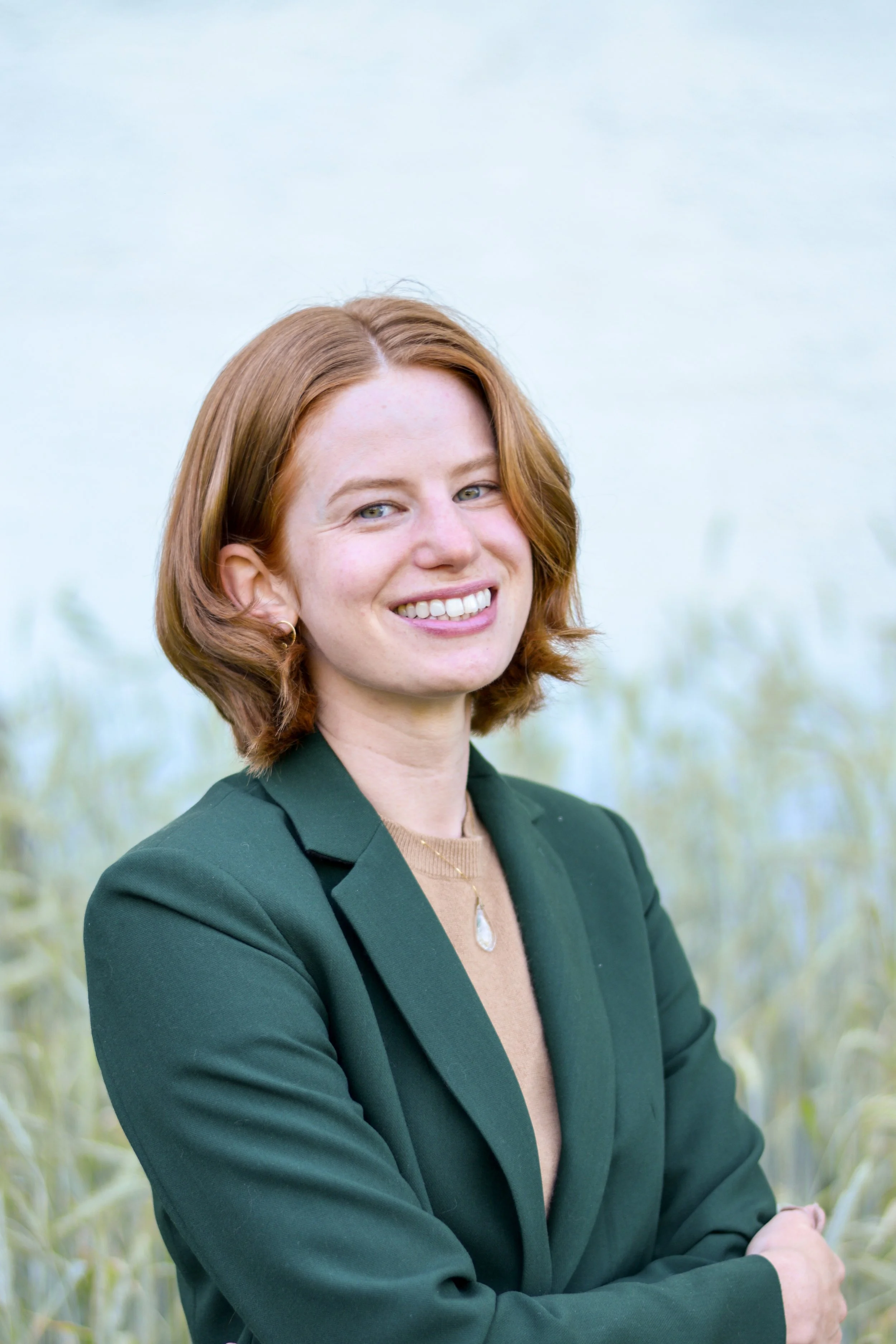
Sophie Benn, PhD, enjoys a multifaceted career as a musicologist and cellist. She is an assistant professor of musicology in the Jordan College of the Arts and affiliate faculty in the Race, Gender and Sexuality Studies Program at Butler University. Dr. Benn’s research centers on topics of dance, identity, and performance practice in France and the United States in the late nineteenth and early twentieth centuries. As a cellist and baroque cellist, Dr. Benn is a frequent performer on faculty recitals at Butler University as well as in chamber music concerts across Indianapolis and the surrounding region. Between 2017 and 2021, she was Director of Cleveland Uncommon Sound Project (CUSP), an organization dedicated to new and experimental music that she co-founded with the saxophonist Noa Even. She is also active as a board member of several music nonprofit organizations including as Board President for the medieval music ensemble Trobár. A proud Midwesterner, she lives in Indianapolis with her husband Nick, a musicologist who works in the music industry, and their two cats, who have no careers to speak of.
