

Beyond Vivaldi: About the Program
By Dr. Sophie Benn
In the years around 1700, new orchestras made up of excellent musicians began to crop up across the Italian states. The level of playing at the Basilica of San Petronio brought great honor to the city of Bologna. In Rome, battalions of virtuoso string players would perform at the behest of aristocrats and the Church. And composers began to write new kinds of pieces to showcase these exciting new ensembles.
One genre that emerged in this context was the concerto. Etymologically, the word “concerto” comes from the Latin concertare, which has two seemingly antonymic meanings: it can mean either “to collaborate” or “to dispute or argue.” While the term was first used for vocal works, by the last two decades of the seventeenth century, certain instrumental pieces started to be called “concerti.” These early concerti were often enlargements of the more intimate chamber sonata. While the concerto did not start as a showcase for solo players, it quickly was adapted to that use (it is no accident that four of the composers on the program—Torelli, Corelli, Locatelli, and Vivaldi—were astounding violinists). By the 1710s, the term was most often used to indicate a multimovement work with one or more solo parts and accompaniment by string orchestra—but not everybody used it that way.
Bologna
Giuseppe Torelli (1658–1709) was among the first composers to write pieces he called “concerti.” Born in Verona and trained as a violinist, Torelli moved to Bologna in 1684. The northern Italian city was one of the chief religious, academic, and musical centers on the peninsula, and by the middle of the seventeenth century, its Basilica of San Petronio had become the home of a new school of string playing. Torelli quickly became a member of the Basilica orchestra. A decade later in 1696, however, San Petronio was forced to disband its orchestra due to financial constraints, and Torelli embarked on a five-year period of itinerancy. Two years later, he ended up as the maestro di concerto for the Margrave of Brandenburg at Ansbach in what is now south-central Germany. His Op. 6 Concerti, dedicated to the Electress of Brandenburg, were written for this position in 1698.
In the preface to his Opus 6, Torelli requests that sections marked “solo” be played by a single violinist, and the remaining parts performed by three or four players each. Two of the set—including the tenth, the concerto on this afternoon’s program—have such solo violin passages, making these works arguably the first solo violin concertos in the repertoire. Torelli didn’t stay at Ansbach long, and moved to Vienna in late 1699. Finally, he was able to return to his beloved Bologna when the San Petronio orchestra was reconstituted in 1701.
Rome
Meanwhile in Rome, composers favored a different configuration of the concerto: the concerto grosso. These operate something like an amplified trio sonata, in which a band of two solo violinists and a cellist are occasionally supported by a full string orchestra. By far the most successful composer of concerti grossi was Arcangelo Corelli (1653–1713). A violinist who came up in the grand orchestras and chamber ensembles that dotted the Roman courts, his reputation across Europe was bolstered by a boom in music publishing around 1700. Written near the end of his life, his twelve Concerti grossi, Op. 6 (1712) were internationally admired, remaining in the repertory as far as England well into the nineteenth century.
The eleventh concerto in the Opus 6 collection shows Corelli in fine form. He takes as his structure the standard sonata da camera structure, which offers a slow introduction followed mostly by dances. This concerto grosso serves as a showcase for the entire ensemble, and the solo parts stay restrained in their flashiness. One notable exception occurs, however, in the Allemande, when solo cello suddenly breaks free of its supporting role and unleashes a cascade of notes that races through to the end of the movement.
Pietro Antonio Locatelli (1695–1764) never studied with Corelli, but he was unquestionably influenced by him. As a young violin virtuoso in Rome between 1711 and 1723, he was surrounded by his pupils and adapted many features of his style. But while Corelli’s violin writing remains tuneful and restrained, Locatelli pushed violinistic virtuosity to new heights, with astonishingly high playing, double and triple stops and double trills, and new bowing patterns. This flamboyant quality defines the twenty-four caprices of his Arte de violono, a precursor to nineteenth-century violin virtuosity, including Paganini’s 24 Caprices, Op. 1. Locatelli’s other compositions, however, tend to be more moderate in disposition and mark a transition between the baroque style to midcentury galanterie.
Unpublished in Locatelli’s lifetime, this sinfonia bears the descriptive title of Sinfonia funebre, composta per l'esequie della sua Donna che si celebrarono in Roma (“Funereal symphony, composed for the funeral of his lady, as it was celebrated in Rome”). Written around 1720, it is unknown who the lady of the title may be, although some have speculated that it may have been written in honor of the Virgin Mary. While the two sinfonias on this program are standalone works, the designation was also used to refer to the curtain-raiser or interlude of an opera; sinfonias, therefore, can have a quality of drama to them. Locatelli’s work certainly opens with a tragic flourish as the upper parts sustain painful harmonies above a heartbeat in the bass. The final movement, entitled a Consolatione (consolazione, or “consolation”), also suggests some kind of grief narrative.
Venice
Global trade concentrated astonishing amounts of wealth in Venice, which in turn supported a thriving music and entertainment industry. Such riches supported music of all kinds—sacred and secular, vocal and instrumental—and led to a flourishing of orchestral music in a variety of configurations. At the height of his career, the music of the Venetian Tommaso Albinoni (1671–1751) was ranked by many to be equal in quality to that of Corelli or Vivaldi. Particularly in demand were the fifty or so operas he composed. The knack for melodic writing that made his operatic output so successful is on full display in his Sinfonia à 5 op. 2 no. 9 in B-flat Major from 1700. Albinoni benefitted from family wealth due to his father’s stationary and playing card-manufacturing business and so did not have to take a court or church appointment early on. This meant that he worked largely in isolation, and his music tends to have a quirky, pleasing quality to it.
No composer is more intimately associated with the baroque concerto than Antonio Vivaldi (1678–1741). From 1703 Vivaldi worked at an orphanage and music school for girls, the Pio Ospedale della Pietà, and many of his concerti were written with these young pupils and his fellow teachers in mind. Vivaldi’s concerti are notable because the solo part is no longer decorative, but instead serves a structural function. In Vivaldi’s concerti, orchestra and soloist alternate, passing themes back and forth. Unlike the four- and five-movement works that make up the rest of this program, Vivaldi’s concerti also take on a three-movement scheme that became the standard for solo concerti during the early eighteenth century. While we don’t know the exact circumstances that gave rise to Vivaldi’s Flute Concerto in G major RV 436, it seems to have been one of his first original compositions for transverse flute, instead of a rearrangement of a piece for recorder. He may have written it for the Ospedale’s oboe teacher Ignazio Sieber, who was re-hired to teach flute in 1728.
Naples
Naples was known as a center of opera, not instrumental music. But the success of Francesco Durante (1684–1755), who never wrote an opera, demonstrates that there was some diversity in the musical appetites of the city. From 1728, his main employment was at a series of prominent schools: first at the Conservatorio dei Poveri di Gesù Cristo from 1728 to 1739, then the Conservatorio di S Maria di Loreto from 1742 and the Conservatorio di S Onofrio from 1745. Durante was a dedicated and well-regarded teacher: among his pupils were Giovanni Battista Pergolesi, Nicolo Piccinni, and Giovanni Paisiello (all of whom, it must be noted, went on to write opera!). As a composer, Durante was primarily known for his religious vocal works. His secular Concerto à 4 in f minor gives us a window into his masterful ability to balance intricate polyphony with emotional immediacy—a critical skill in sacred music. All instrumental lines are equally important in this work, which allows Durante to emphasize the interplay between parts as they break off into different groupings and respond to each other across the ensemble.
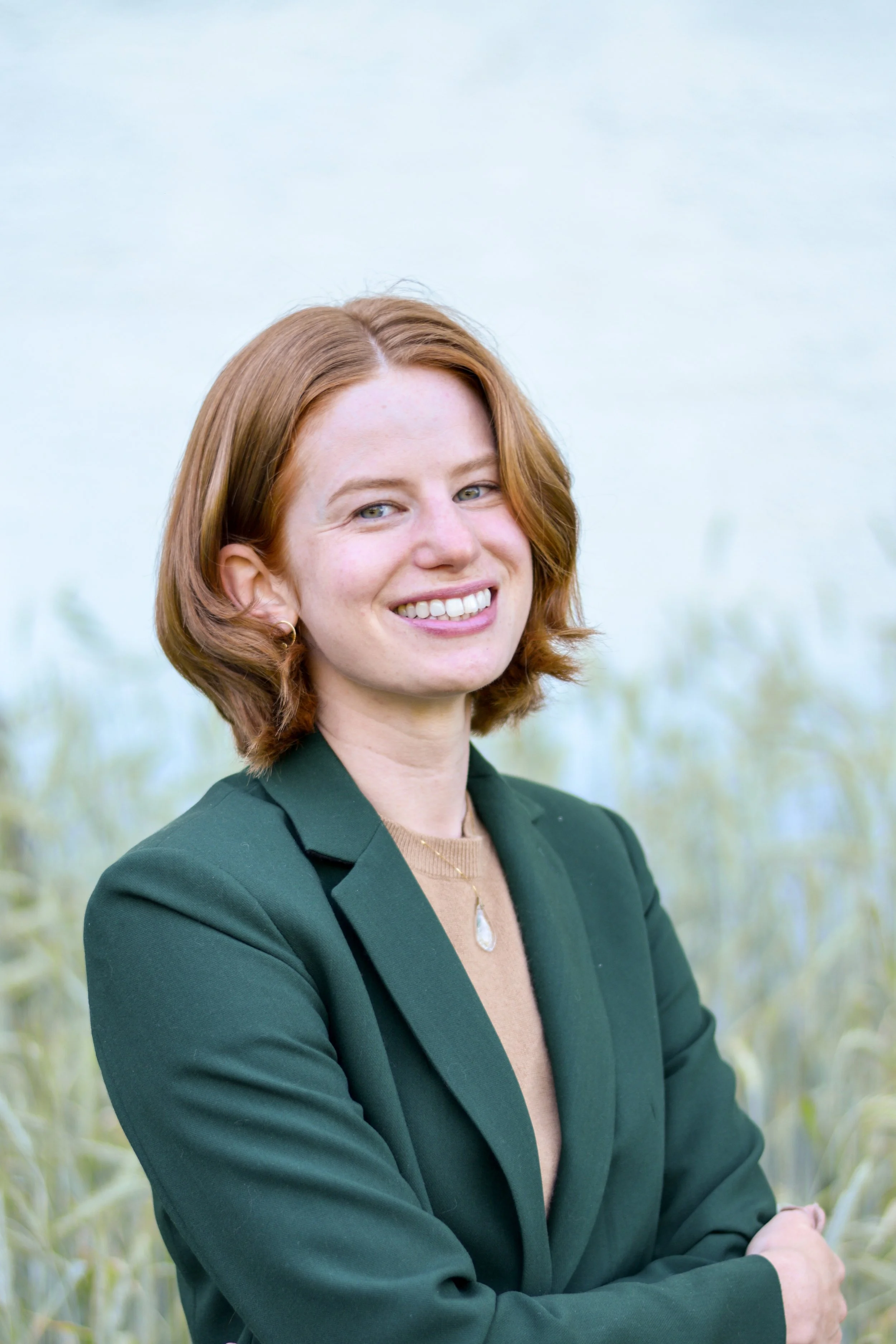
Sophie Benn, PhD, enjoys a multifaceted career as a musicologist and cellist. She is an assistant professor of musicology in the Jordan College of the Arts and affiliate faculty in the Race, Gender and Sexuality Studies Program at Butler University. Dr. Benn’s research centers on topics of dance, identity, and performance practice in France and the United States in the late nineteenth and early twentieth centuries. As a cellist and baroque cellist, Dr. Benn is a frequent performer on faculty recitals at Butler University as well as in chamber music concerts across Indianapolis and the surrounding region. Between 2017 and 2021, she was Director of Cleveland Uncommon Sound Project (CUSP), an organization dedicated to new and experimental music that she co-founded with the saxophonist Noa Even. She is also active as a board member of several music nonprofit organizations including as Board President for the medieval music ensemble Trobár. A proud Midwesterner, she lives in Indianapolis with her husband Nick, a musicologist who works in the music industry, and their two cats, who have no careers to speak of.
